Friday, October 25, 2019

Dirty, Dirty Rice – Filthy Delicious

Believe it or not, the first place I ever had dirty rice was Popeye’s fried chicken. They were out of the red beans and rice. I’ve never been a huge fan of liver, especially in my younger days, but I figured, what the heck, let’s give this stuff a try. Much to my surprise I really enjoyed it, and I’ve been a fan ever since.

In fact, not only did I come to love dirty rice, but I started to crave it with even more “dirt,” by which I mean more liver, pork, and aromatic vegetables; and so that’s how this redundantly named dish came to be. Beyond using more of everything, except rice, I also changed the traditional method, which calls for the rice to be cooked first, and then “soiled.” Here, we’re adding all the “filth” at the beginning, and cooking it into the rice.

This method did produce a more flavorful product, but also a slightly stickier one. When you cook rice in a thick sludge like this, verses just water or broth, it will always come out a bit starchier, which may bother certain dirty rice aficionados, but I like this texture even better. So to recap, this is dirtier, stickier, and tastier, which is why I really do hope you give it a try soon. Enjoy!


Ingredients for 6 portions:
1 tablespoon vegetable oil
6 ounces pork shoulder, diced or roughly chopped
1 yellow onion, diced
1/2 cup diced celery
1/2 cup diced green peppers, or jalapeno
6 ounces cubed spicy smoked pork sausage, like andouille
1 tablespoon paprika
2 teaspoons cumin
2 teaspoons freshly ground black pepper
1/2 teaspoon cayenne pepper
1/2 teaspoon garlic powder (or some fresh)
1/4 teaspoon dried oregano
1/4 teaspoon dried thyme
8 ounces finely minced raw chicken livers
2 cups long grain rice
2 teaspoons kosher salt, or to taste
4 cups broth
1/4 cup sliced green onions
1/4 chopped Italian parsley
-->

Tuesday, October 22, 2019

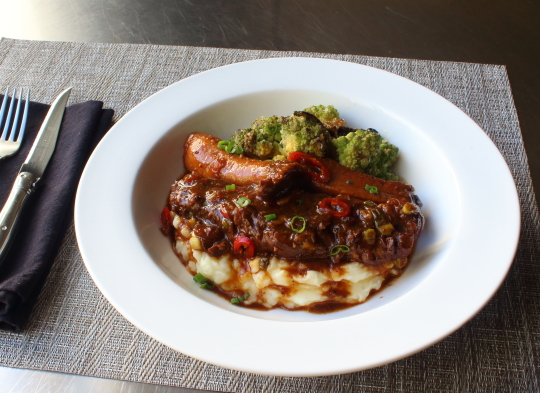
Miso Braised Beef with King Trumpet Mushrooms – Comforting and Exciting?

When people think comfort food, they generally think of classic, iconic recipes that are made the exact same way every time. No one likes change, and it’s this timeless consistency that in large part makes these dishes so comforting. However, as much as I love a traditional beef stew, or braised beef short ribs, once in a while, I enjoy using these same techniques with a few non-traditional ingredients, just to shake things up.

Speaking of which, if you’re not familiar with miso, it's a fermented soybean and rice paste, and it just makes everything taste better. It’s relatively easy to find in your larger grocery stores, and a few spoonfuls will add an extra element of savoriness to these already savory dishes. To balance that, among other things, we’re also adding a touch of maple syrup, which helps give this even more of an autumnal feel.

I kept things pretty simple with the vegetable additions, going with just mushrooms and onions, but the classic beef stew array of carrots, celery, onions, and potatoes would also work as well. And I wasn’t kidding about the King Trumpet mushrooms being as good as the beef. They really were amazing, and this would make for a fantastic meatless meal using those alone. Either way, I really do hope you give this a try soon. Enjoy!


Ingredients for 4 portions Miso Braised Beef:
2 tablespoons peanut, or vegetable oil
2 1/2 pounds beef chuck, or boneless beef short ribs, cut into 2-inch thick strips or chunks, seasoned with salt, freshly ground black pepper, cayenne
1 tablespoon butter
3 or 4 King Trumpet mushrooms, halved, or any mushrooms
1 yellow onion, diced
1/4 cup sake, or white wine
3 tablespoons yellow miso
2 tablespoons maple syrup
2 tablespoons ketchup
1/2 cup chicken broth
1 tablespoon rice wine vinegar or any vinegar
1/4 cup sliced red chilies
1/4 cups sliced green onions
-->

Friday, October 18, 2019

Grandma’s Peanut Butter Fudge – Which Grandma? We’re Not Exactly Sure

There is nothing quite like a batch of old-fashioned peanut butter fudge, especially when it’s freshly made by your Grandma. Which is why I really wish my Grandma would have made peanut butter fudge. Oh well, she gets a pass because of the other delicious things she fed me.

This old-fashioned style of peanut butter fudge is not that easy to find. Admittedly, I’ve not looked that hard, but the times I have run across some, it always seems to be the soft, creamy version, which is not the kind I’m into. If it’s going to feel like peanut butter in my mouth, then what’s the point? No, I want something that feels dense, and firm in my fingers, but will almost instantly liquefy in when it hits my tongue.

As I mentioned, you’ll want to cut this when it’s just cool enough to get a clean slice. If you leave it in the fridge, and then cut it ice-cold, it will tend to fragment. The good news is that peanut butter fudge shards are delicious, so it’s not really that tragic of a problem. And yes, this technique will work with other nut butters, like almond, or cashew, just in case someone around you is allergic, but regardless of what you use, I really do hope you give this peanut butter fudge a try soon. Enjoy!


Ingredients for 64 small cubes of Peanut Butter Fudge:
1 1/4 cups unsalted butter
1 1/2 cups creamy peanut butter
1/2 teaspoon kosher salt (or 1/4 teaspoon fine salt)
1 1/2 teaspoons vanilla extract
1 pound powdered sugar, sifted (about 3 1/2 to 4 cups unsifted)
-->

Tuesday, October 15, 2019

Bacon-Wrapped Cranberry Walnut Pork – Fancy, Not Fancy

It’s getting close to that time of the year when we spoil our guests by making them extra-fancy, labor-intensive, time-consuming meals. Or, we can make them something like this bacon-wrapped cranberry walnut pork tenderloin instead, which just seems like it would be all those things. Yes, the hardest thing about this gorgeous recipe is not spilling the beans about just how simple it was to do.

This is really more of a technique video, than a specific recipe, since you can fill it with whatever strikes your fancy, but as far as seasonally appropriate ingredients go, I loved how this came out. Beyond being able to adapt this to your tastes, another advantage is that we can prep it ahead of time, and just pop it into the oven when we’re ready to rock, and by “rock,” I mean impress our guests.  

One thing to be aware of is that pork tenderloins do vary a bit in size. The one shown here was on the smaller side, and weighed in at just about one pound. They’re generally closer to 1 1/4 to 1 1/2 pounds, and if that’s the case for yours, be sure to add a little more roasting time, and double check things with a thermometer.

Also, if you’re going to be doing more than one, make sure you’re buying tenderloins that are all about the same weight. The butcher will be more than happy to weigh a few, and get you what you need. Other than that, not much can go wrong, except of course, after a few glasses of wine you admit how simple and easy this really was. Either way, I really do hope you give this a try soon. Enjoy!


Ingredients for 2 large or 4 smaller portions:
1 trimmed pork tenderloin (1 to 1 1/2 pounds)
salt, freshly ground black pepper, and cayenne to taste
2 teaspoons Dijon mustard
1 or 2 teaspoons freshly minced rosemary
 1 or 2 teaspoons finely sliced fresh sage leaves
1 tablespoon bread crumbs, or enough to lightly coat surface
1/4 cup chopped, lightly toasted walnuts, or as much as you like
1/4 cup chopped dried cranberries, or as much as you like
4 strips thinly sliced bacon, or enough to wrap the pork
- Roast at 450 F. for 25-30 minutes or until the bacon is browned, and you’ve reached an internal temp of at least 145 F.

For the pan sauce:
2/3 cup white wine
2 tablespoons balsamic vinegar
2 teaspoon Dijon mustard
2 tablespoons cold butter
salt and freshly ground black pepper to taste
-->